Lakeland 50
Posted by Ed on August 24, 2026
The Lakeland 50 is a 50-mile trail race taking place in the Lake District, Cumbria, in the north of England. Taking in around 2900m of elevation gain across 78km, it mixes challenging technical terrain with more runnable sections, and showcases the eastern half of the Lake District without ever summiting any tops.
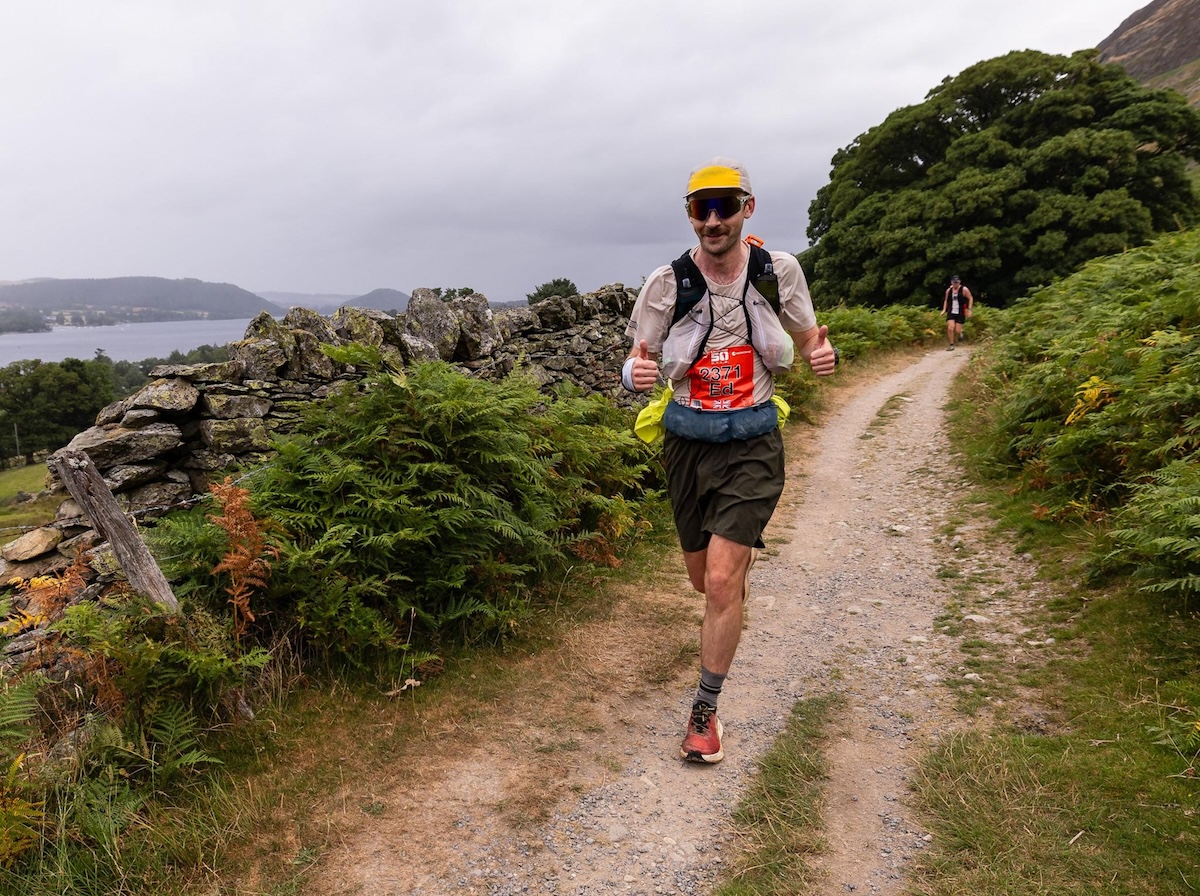
I finished in 10:27:57, 83rd overall, 72nd man, and 32nd in my age category.
I recorded a full debrief on my podcast, Feet First – listen here or wherever you get your podcasts.
Pre-Race
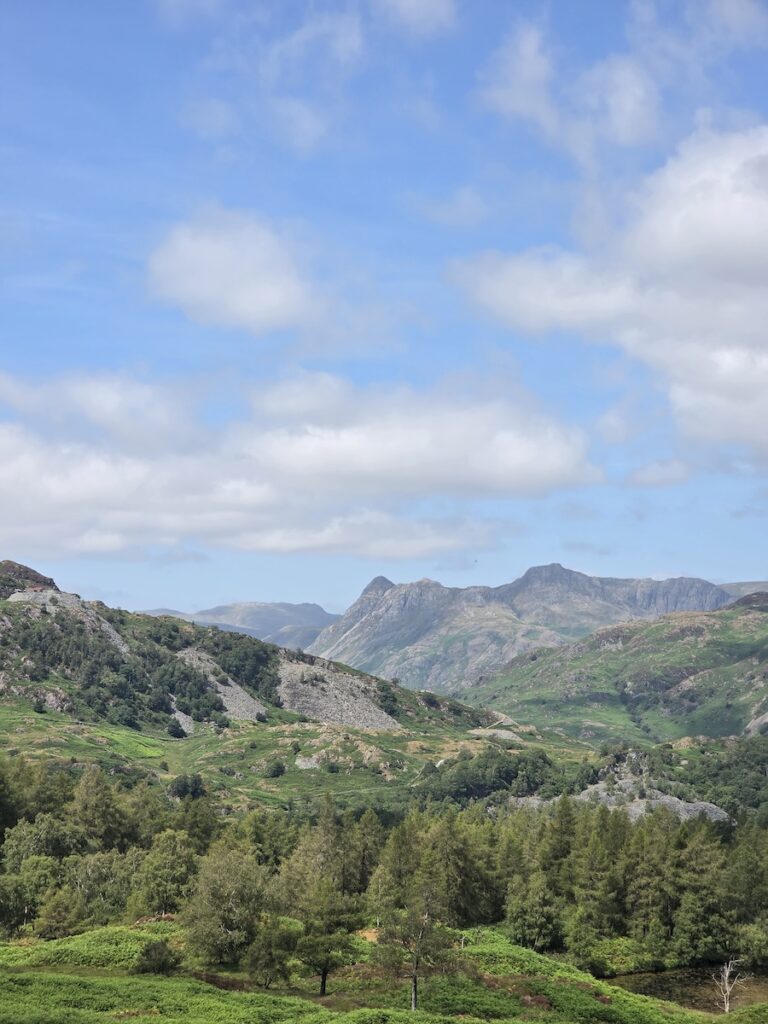
Wanting to take advantage of the opportunity to visit the Lake District, which I had only ever done before on a bicycle, I set off from London on Wednesday before race day to complete the long drive north. I camped at Coniston Hall, which I can highly recommend, and enjoyed bagging my first two Wainwrights ever on Thursday – Black Fell and Holme Fell. These are two of the smallest Wainwrights going, which was perfect as I didn’t want to tire myself out before the race. They offer spectacular views of the surrounding fells and are well worth a trip. (Link here to my Strava for the route.)
On Friday I headed over to John Ruskin School to register and set up camp there. I deliberately didn’t rush over as I wanted to have a peaceful morning. I ended up in the secondary field which suited me well as the main campsite was right in the heart of the action and so quite noisy.
I then headed over to kit check. The kit list for Lakeland is quite extensive; there’s a lot of stuff in there that makes sense – full thermal and waterproof coverage from head to toe, for instance – but also items that I think were excessive, including a ‘non-folding cup’ for hot beverages. (I’ve heard tales of some athletes using old film canisters to minimise weight.) Thankfully kit check passed without a hitch.
Top tip: if you’re taking part in Lakeland I’d recommend getting to kit check as early on Friday as you can. I thought my 20-minute queue was long, but later that evening it snaked right out of the tent and must have been close to an hour. Not great the day before a 50-miler.
After registering I mooched about in my tent for a while before heading back over to watch the start of the 100-miler. Crowds were already lining the street, so I ended up parking myself at the top of the road. It was fantastic to watch the 800+ runners come flying down the road. It gave me a first taste of the incredible levels of support that runners at Lakeland enjoy from the local community.
After that it was time for an early night.
Race Day
My goals for this race were three-fold:
- Enjoy my first Lakeland. This is a race people always talk about as being super special, and I wanted to prioritise soaking up the experience.
- Run the downhills well. Typically I struggle on technical downhills but I’d made an effort in training to improve.
- Run strong in the first half. It’s normal for me to ‘ease in’ to a race but at Lakeland I knew going out strong would be important to avoid getting stuck at bottlenecks.
The 50-miler starts just overhalfway through the 100-miler at the Dalemain estate on the northeastern edge of the Lake District National Park. Runners have the option of jumping on one of many coaches provided by the race which take you on the approximately one-hour journey from Coniston in time for the 10AM start. I got to the coaches for around 7AM and was surprised to find an already quite long queue through the campsite, but thankfully it moved quite quickly. I nursed a cup of coffee and a flapjack on the journey over, chatting with fellow runners John – who it turns out I had a mutual connection with via Into Ultra – and Leanette – who, despite her being from deepest, darkest Orkney, it turns out I also had a mutual connection with via my running club, Crystal Palace Fun Runners. The running world is ridiculously small!
Upon arriving at Dalemain I jumped straight into the very long loo queue (expect to wait 30 minutes here) before heading over to the starting pen, which the race organisers opened with about 10 minutes to go. I made my way to the front, not wanting to get stuck in a bottleneck as so many people had warned me was a risk at this event. The race starts in two waves, but these are not pre-mandated, so if you want to be near the front it’s worth making the effort to get into the pen before they close it. I knew I was nearer the front than necessary – to one side I spotted and briefly chatted to Dan Weller and Charlotte Fisher, both previous podium finishers at Lakeland – but I stuck to my guns and waited for the countdown.
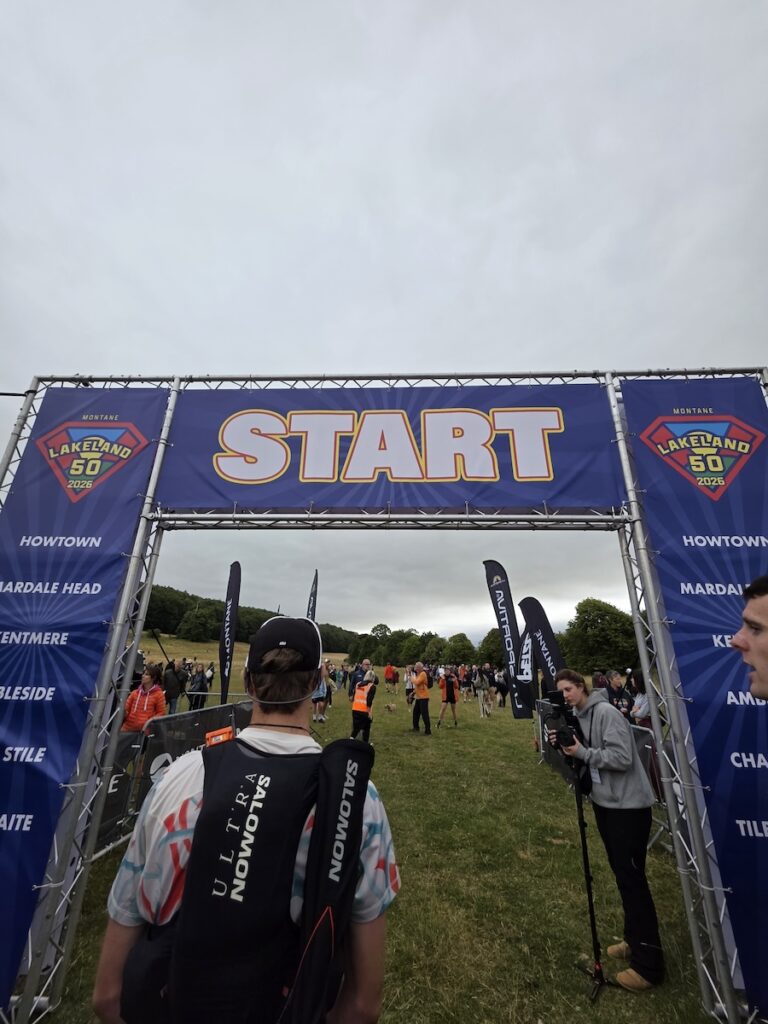
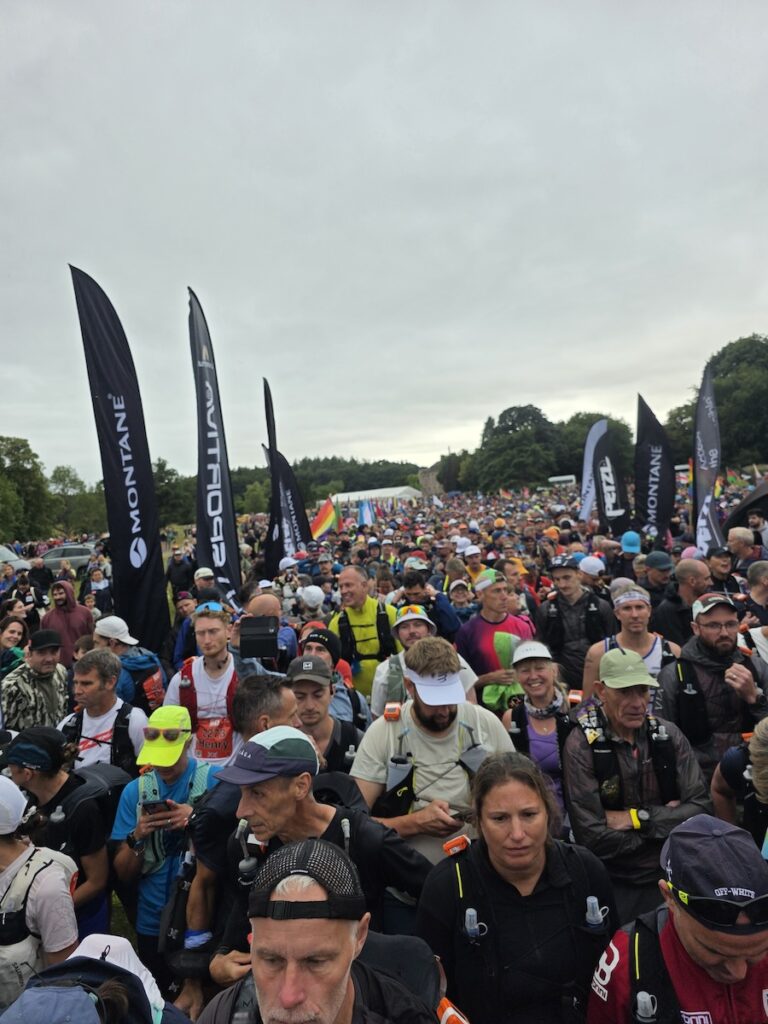
The race starts with a 6km lap of the Dalemain estate on grassy trails. It’s not particularly exciting terrain, but you do pass by spectators quite a bit which creates a sense of occasion. Almost straight away you do a couple of right angle turns which mean you can look over to see a huge long queue of runners behind you, which really drives home just how big this race is.
I made an effort to get out ahead of the main crowd here, which meant I definitely slightly overdid it, especially on some of the climbs. My heart rate kept floating in to the 160s and even touched 170 at one point before I reigned myself in. These efforts can feel effortless at the start of a race when the adrenaline is pumping but I knew that too much time spent ‘in the red’ would come back to bite me later on in the race. I managed to get it under control as the runners spread out a bit, and as we passed back by the start line and headed out into the Park properly (passing a few 100-mile runners here and there) I felt like things were under control.
Quite quickly after leaving Dalemain we passed through Pooley Bridge, a small village, which was lined with people clapping and cheering you on. This was proving to be a trend, and one I thoroughly enjoyed! We then hit a small climb out on the road which turned into a bigger climb on the trail – I made an effort to run wherever I could, walking the steeper bits but not letting the momentum fade. I could still feel the weight of the 1400+ runners behind me, and I definitely overcooked it on the descent, which was moderately technical in places but thankfully never particularly steep.
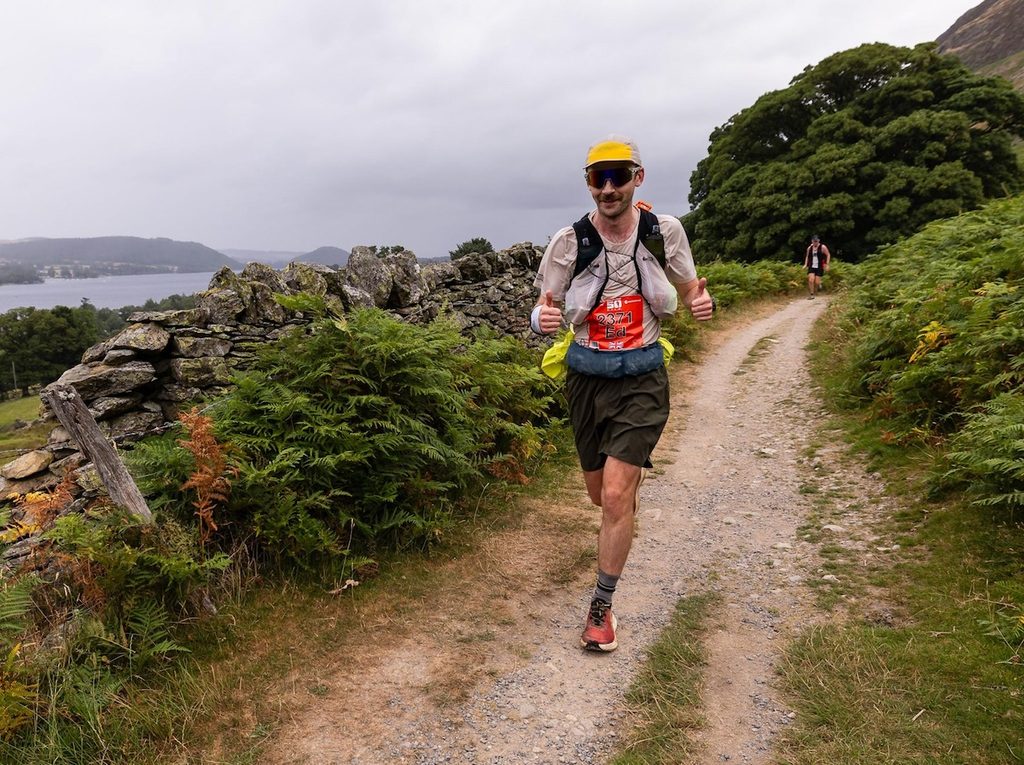
About 15km in we hit the Howtown aid station, which involves a short out-and-back. I refilled all my bottles and got out of there quickly, which I slightly regretted as it turned out the next section took much longer than I thought. In future I’ll make sure to take a moment at Howtown to take stock and fully rehydrate in preparation for what’s to come.
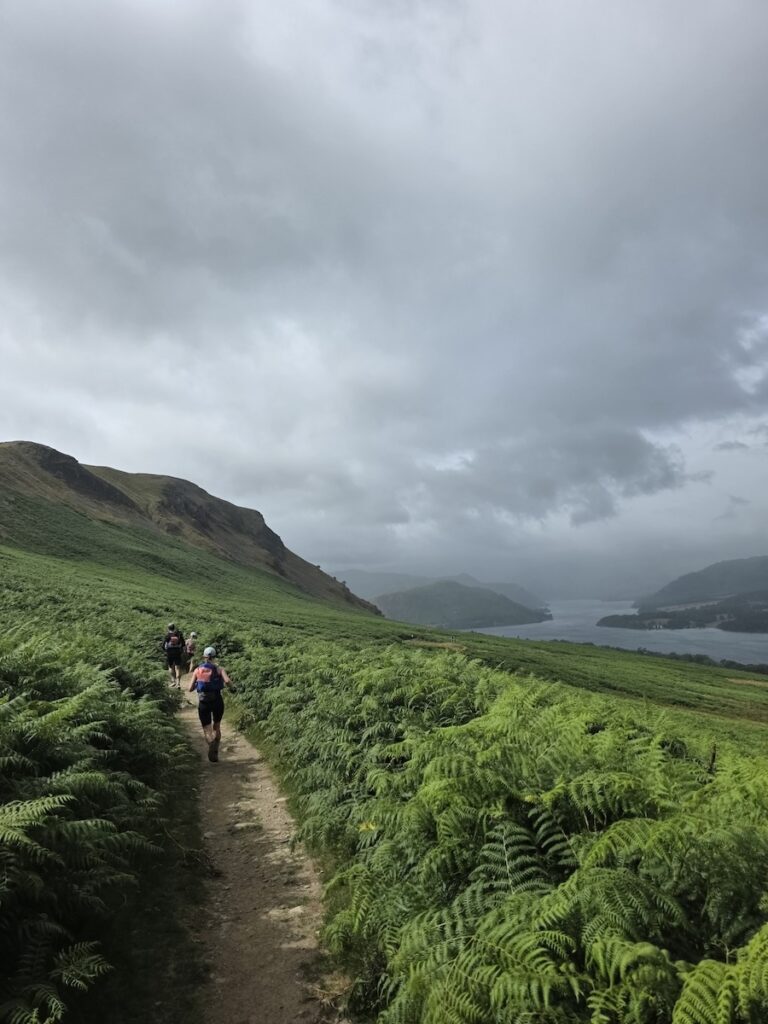
Leaving Howtown you soon hit the bottom of Fusedale, the biggest climb of the day, which takes you 500m up and over a mountain pass. It’s about 5km long so although in places it’s steep, it’s more a test of endurance than power. I felt like I was moving well up it, my climbing legs coming into their own; the descent down the other side was mercifully non-technical at first, entirely on springy grass. Eventually it gave way to a more fiddly trail partially buried by ferns, and whilst I moved well and nobody passed me, I did light a few matches trying to hold pace on this section.
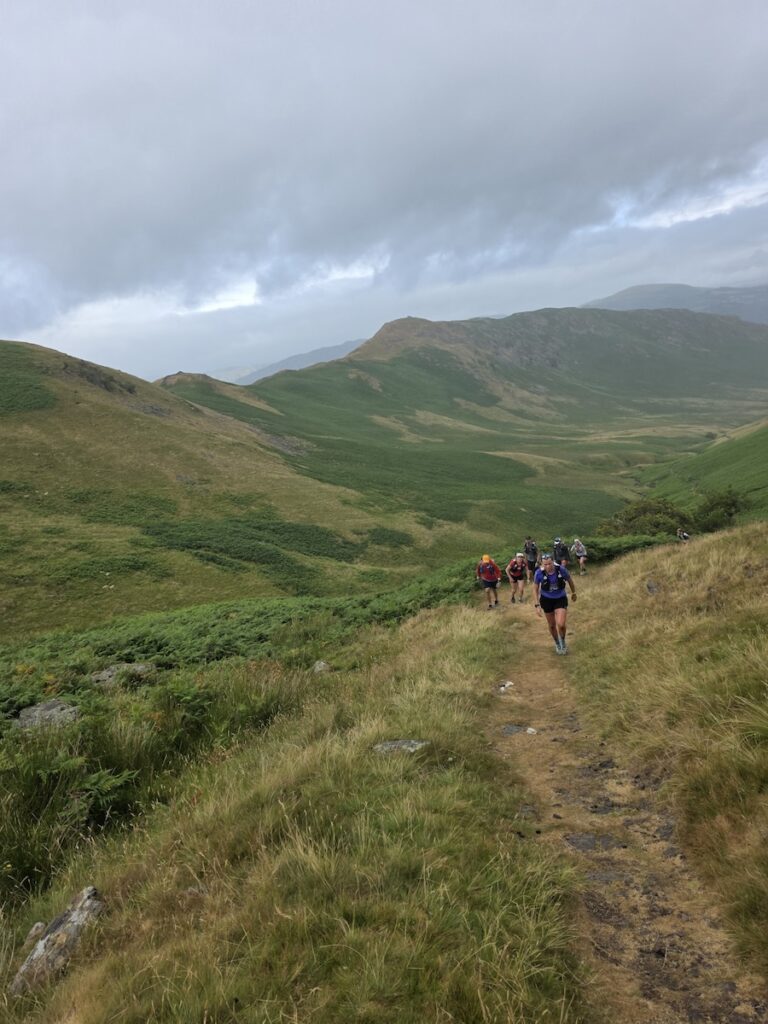
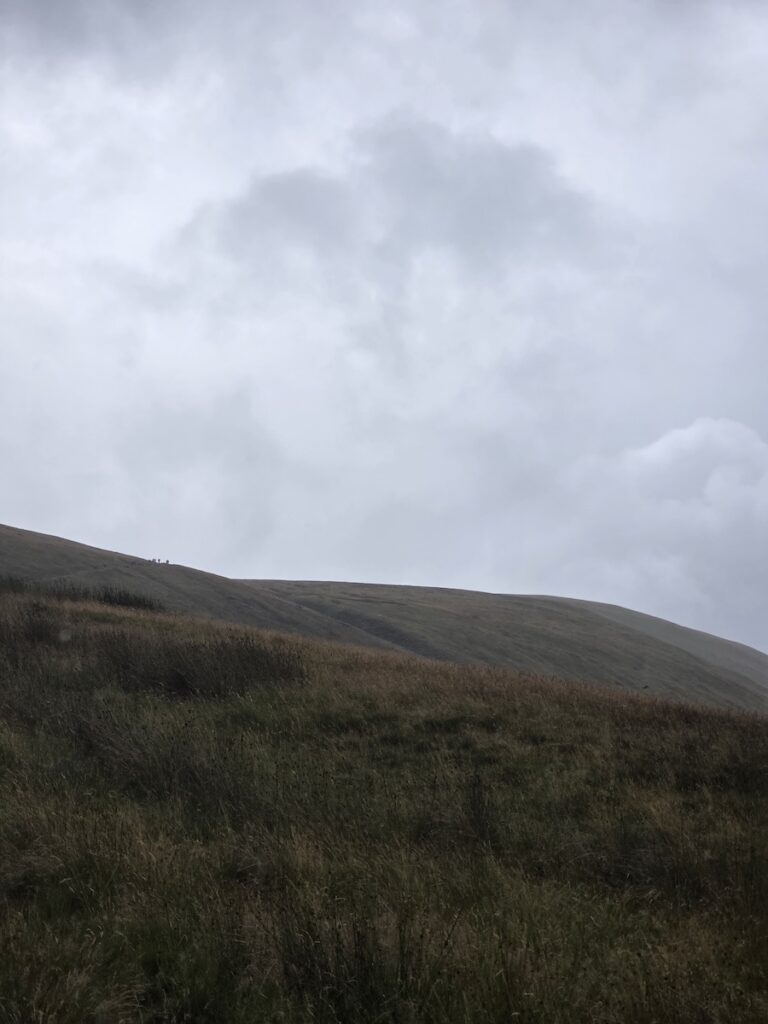
The descent off Fusedale bottoms out on the edge of Haweswater, a man-made resevoir which fills the valley of Mardale. Fun fact: there was an entire village in this valley before it was deliberately flooded in 1935, and eerie remnants of the settlement can still be seen when the resevoir dries up.
A long stretch of singletrack trail snakes around the side of the resevoir, which is great fun to run on. It’s here that going out hard does pay off, as many people flag Haweswater as a section that gets congested with 50-milers trying to pass 100-mile runners, but I didn’t have an issue. I fell into a conga line with a pack of 4 or 5 other runners, trading places occasionally but largely just flowing together through the trail. Don’t get me wrong, it’s technical underfoot in places and you often can’t see your feet clearly due to the ferns – but it’s never particularly steep so you can find a good rhythm.
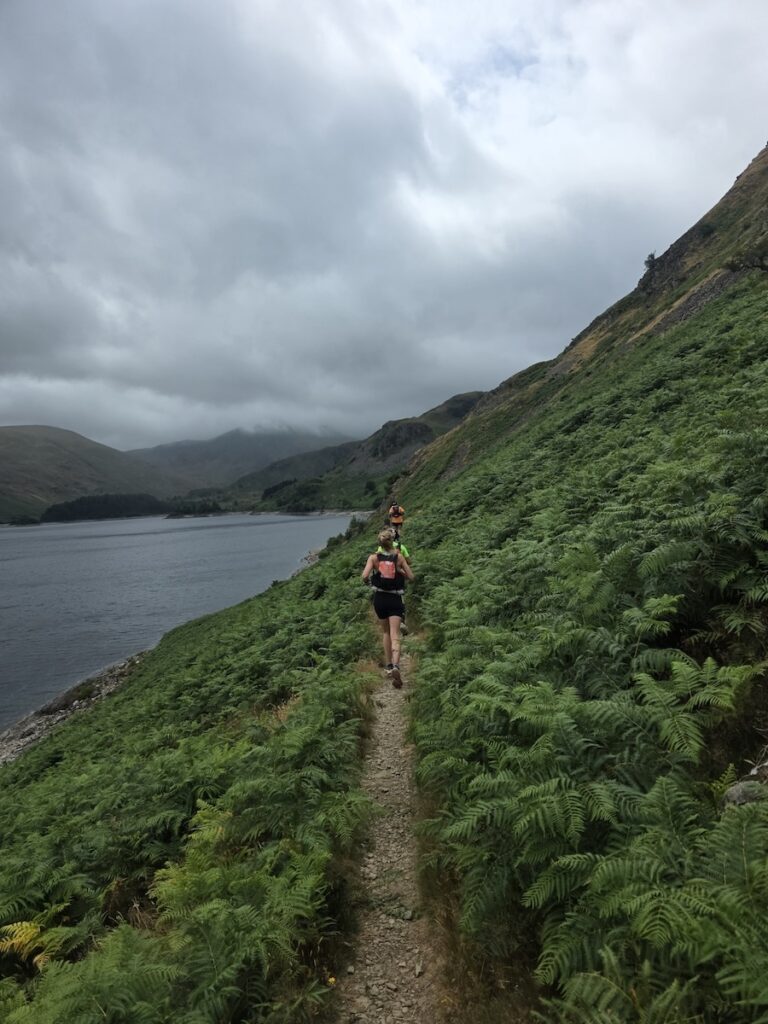
Unfortunately it was on this section that I ran out of water with 3 or 4km to go until the Mardale Head aid station. This was frustrating and I could see my heart rate was creeping up higher than it should as I dehydrated. Whilst not hot, the valley was exposed and definitely warmer than up to. The sun had emerged from behind the clouds for a bit which added to the discomfort. Thankfully I’ve run enough ultras to know how to reset and recalibrate, and when I finally got to the aid station I made a point of drinking plenty of water, not rushing things, waiting for my body to feel like it was coming back online again.
I briefly said hello to Tom from Freedom Racing here before leaving the aid station and embarking on the second big climb of the day up Gatescarth Pass. Not as long as Fusedale, it’s nonetheless pretty steep and largely on a rocky bridleway. The descent off the top was rocky and rutted, but largely non-technical, though there was some tricky footing here and there. I got passed by a couple of runners with whom I’d been holding my own on the flats, and I got a bit frustrated, but I managed to reign it in and remind myself that I was racing very much out of my usual comfort zone.
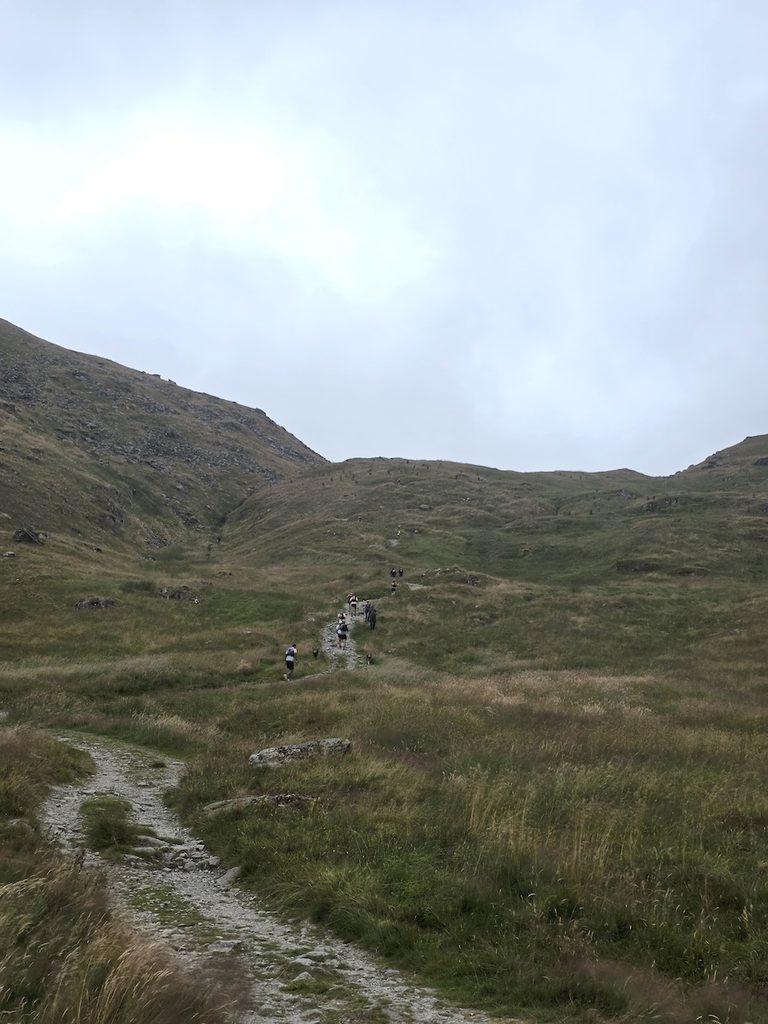
Once the descent bottomed out, we hit another, shorter climb which joins a road just outside of Kentmere. I made the mistake of following a 100-mile runner up ahead who missed a near-invisible turning off the road, but luckily the runner behind me called ahead to catch our attention and I only went maybe 25 metres out of my way. I hit the Kentmere aid station – almost exactly the marathon mark – in 5:10 elapsed, opting not to enter the aid station itself but just make us of the water top-up outside it.
There then followed a 3km, ~300m ascent out of Kentmere which I found to be one of the toughest of the day. Loose rocks and scree scattered the trail and made it very slow-going. Reaching the top, I fell into a loose group of runners all on a similar pace, including a friendly guy from Manchester running his first ultra whose name I failed to catch. He had the look of a faster runner who could smoke me on the roads, but he was clearly suffering on the trails. We leap-frogged on the rocky descent for a while before forming something of a coalition once the trail smoothed out and we were able to actually run at a decent pace. For a mile or two I was reminded just how much I love flowing, runnable trails, and I probably lit a match here that I should have held back.
The route then passes briefly through the village of Troutbeck – where I spotted last year’s winner Lewis Bowness by the side of the road cheering runners on – before a short climb and descent into Ambleside at 55km mark. The crowds lining the streets in Ambleside were nothing short of incredible – literally every pub, cafe, and shop had people cheering me through. I must have hit Ambleside just before 3pm so it was perfect timing for the support. At first I resorted to my usual sheepish ‘avoidant’ approach, but then decided to embrace the joie de vivre and did a bit of arm-waving to big up the crowd, which really buyoed my spirits.
At Ambleside, the aid station volunteers had adopted a ‘Cops and Robbers’ theme. A volunteer waved me in. “Slow down there, buddy – what’s the rush?”, he pined. I helped myself to some coke and topped up my bottles before hobbling out on the flat path through the crowded Rothay Park, feeling rather exposed this late in the race.
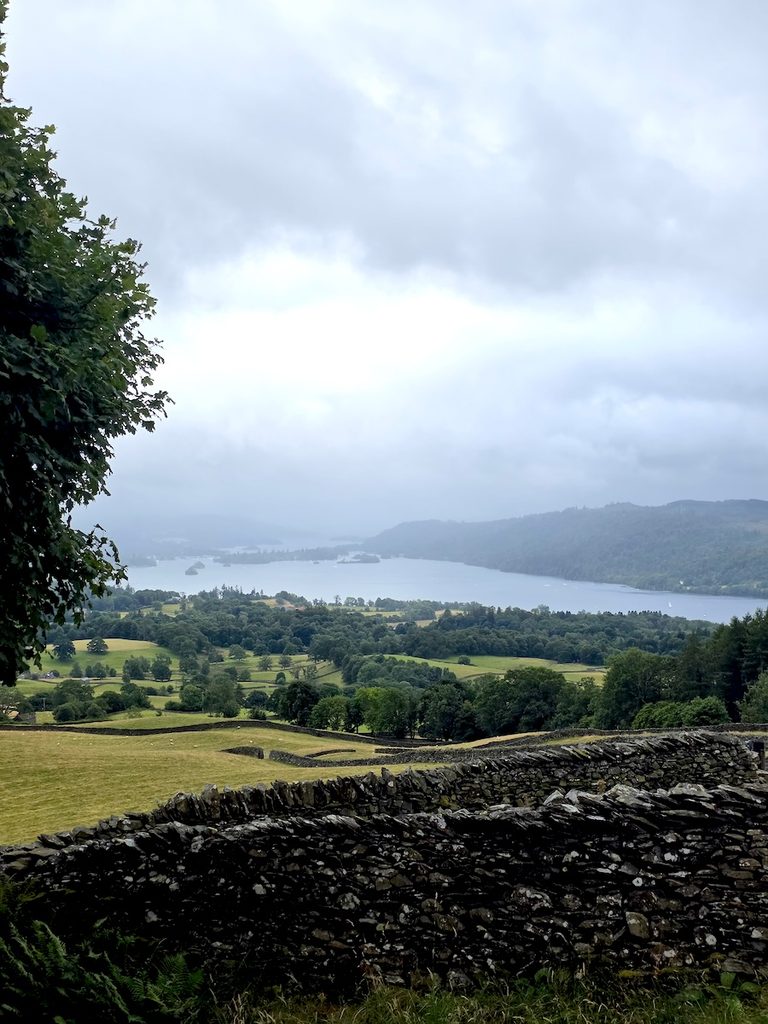
After a short climb and descent out of Ambleside we hit a section which I now know to be a, if not the, crux of the race – the riverside path connecting Skelwith Bridge with Chapel Stile. For about 6km the trail is pancake-flat, presenting a fantastic opportunity to bank some quick miles and drag the average pace up. Unfortunately, having lit one too many matches earlier in the race, I struggled to run any faster than six-minute kilometre pace, my quads having blown up long before this section. I was still moving well relative to those around me, but I got passed by a few veterans who clearly had anticipated this section and held back accordingly.
After what felt like an age, I finally arrived at the Chapel Stile aid station, again making quick work of it. A sub-10 finish was slowly slipping from my grasp, but I still wanted to get the race over with as quickly as possible. There’s a steep climb out of Chapel Stile which was actually a relief after so much flat, before an awkward, slightly boggy traverse around the flank of the Pike of Blisco. It was at this point, as the bog gave way to road, that I accepted a sub-10 was not going to be on the cards; even on a smooth tarmac descent, I could not manage anything more than a slow shuffle. The kind pace I’d have expected to be holding late in a badly-paced 100-miler, not at the tail end of a 50-miler.
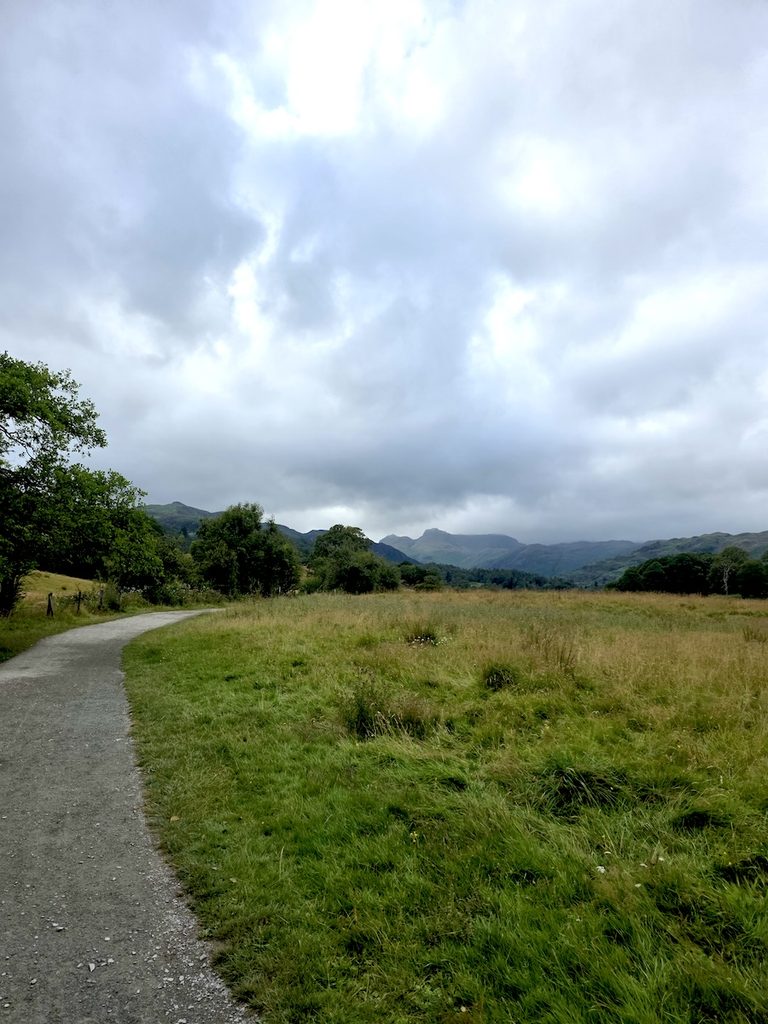
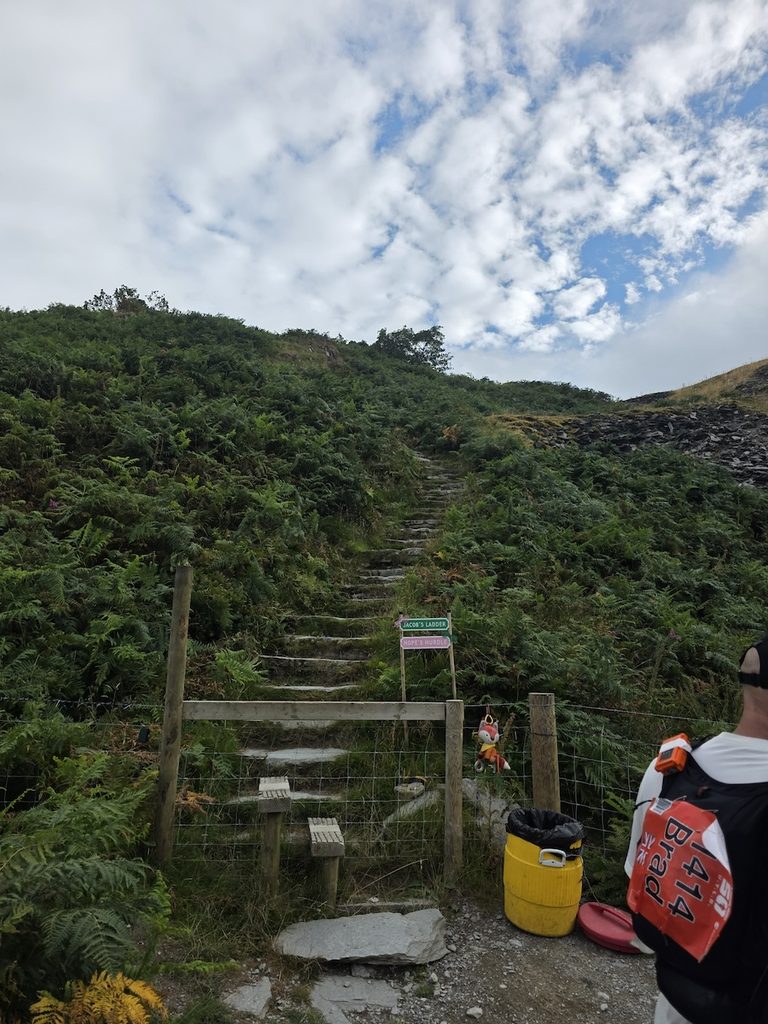
It was something of a relief, then – after depositing my obligatory £1 dontation at final aid station in Tibberthwaite – to be on the final climb up and over Jacob’s Ladder. Although technical and steep, I knew that my race was going to be over inside an hour, and I made a point of trying to enjoy the final miles. The climb itself was relatively exposed in places, with a steep drop-off on one side; I wouldn’t like to have tackled it in the dark with 95 miles in my legs. Reaching the top, I started chatting to another runner who, like me, was struggling to run at a decent pace. Even when the trail flattened out it was still quite technical and twisty.
All of a sudden, who should come flying past me but Tom from Freedom Racing, who I’d not seen since Mardale Head all those hours ago. Tom looked positively chipper as he bounced his way down the trail, calling back to encourage us to press on: “Sub-10:30 is still on the cards!” Alas, whilst my companion was able to hold pace, I simply couldn’t get my legs to move fast enough, and once the trail began to descend and the technicality ramped back up, I watched him and Tom disappear down below as I picked my way sheepishly down the trail.
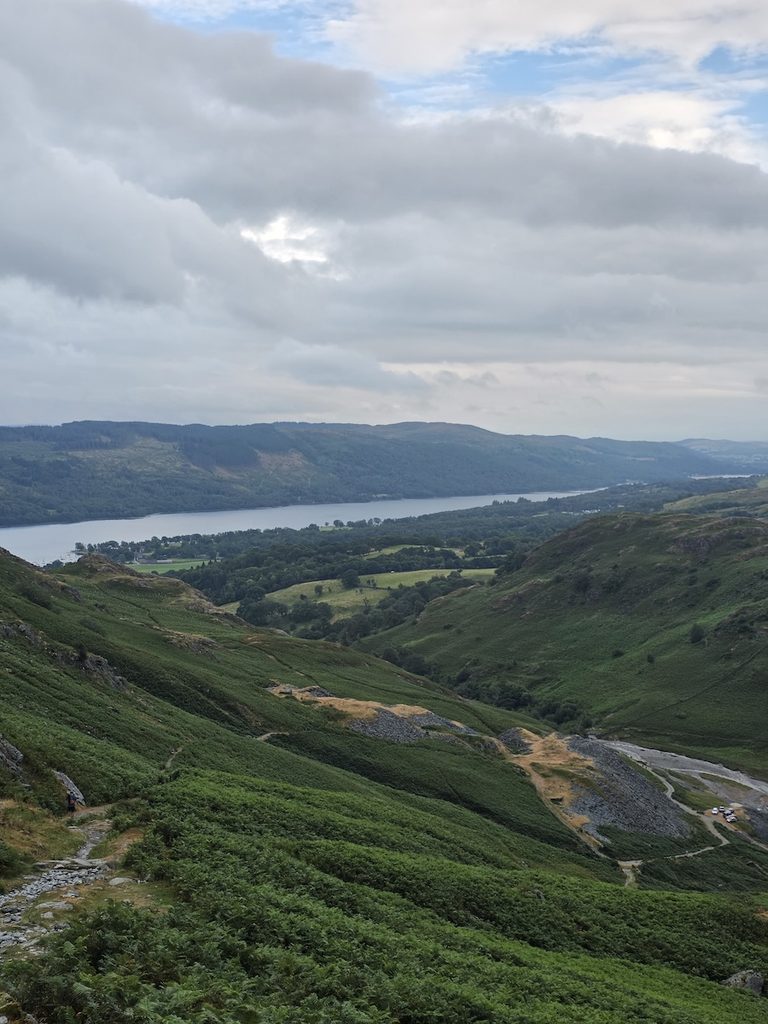
Eventually, the technical descent gave way to a steep gravel road, which in turn led to a paved road, and before I knew it I was running back into Coniston and down the same road I’d watched the 100-mile runners leave via the previous evening. Again, the crowds here were fantastic, and I managed to put together something of an actual run (my watch says I managed 5:45 per km, which for context is my 50-mile PB average pace – gives you a sense of how beat up I was!) as I approached the finish line. Time on watch: 10:27:57. Just managed to scrape it in under 10:30 – thanks Tom!
Immediately upon finishing, a volunteer checked I was okay and escorted me to the same tent where kit check had taken place. As we walked over, she asked about my race experience, whether I’d raced before, etc. and then as we arrived at the tent she announced me to the crowd. “This is Ed, and he’s just run his first Lakeland!” It was a brilliant touch that really helped me reflect upon the difficulties of the last few hours of the race and quickly feel a sense of pride in my achievement.
All in all, although it was more of a sufferfest than I’d bargained for, I was really happy with my Lakeland debut. I went out a bit hard (as was my intention), and whilst I paid the price for it, the time I ran was good enough to be just outside the top 5% of starters. I’ll definitely enter the ballot again, and when I do return, I’ll focus on holding back a bit more so I can take advantage of the runnable of the course which play to my strengths later in the race.
One comment on "Lakeland 50"
Why I’m Running 150 Miles Around Greater London – Ed Scott
August 27, 2026 at 9:36 am
[…] and August; returning to ultrarunning along the way, deliberately choosing races that would take me out of my comfort zone and thus disuade me from thinking about performance goals; and now, culminating in a grand […]
Comments are closed.