Why I’m Running 150 Miles Around Greater London
Posted by Ed on August 27, 2026
On 12th September I’ll be attempting to set a new fastest known time (‘FKT’) on the London LOOP. The mark to beat is 34:23, set by David Bone in 2020.
I’ll be fundraising for TrailFam, a charity working to improve the lives of young people through the sport of trail running. Please consider donating if you can.
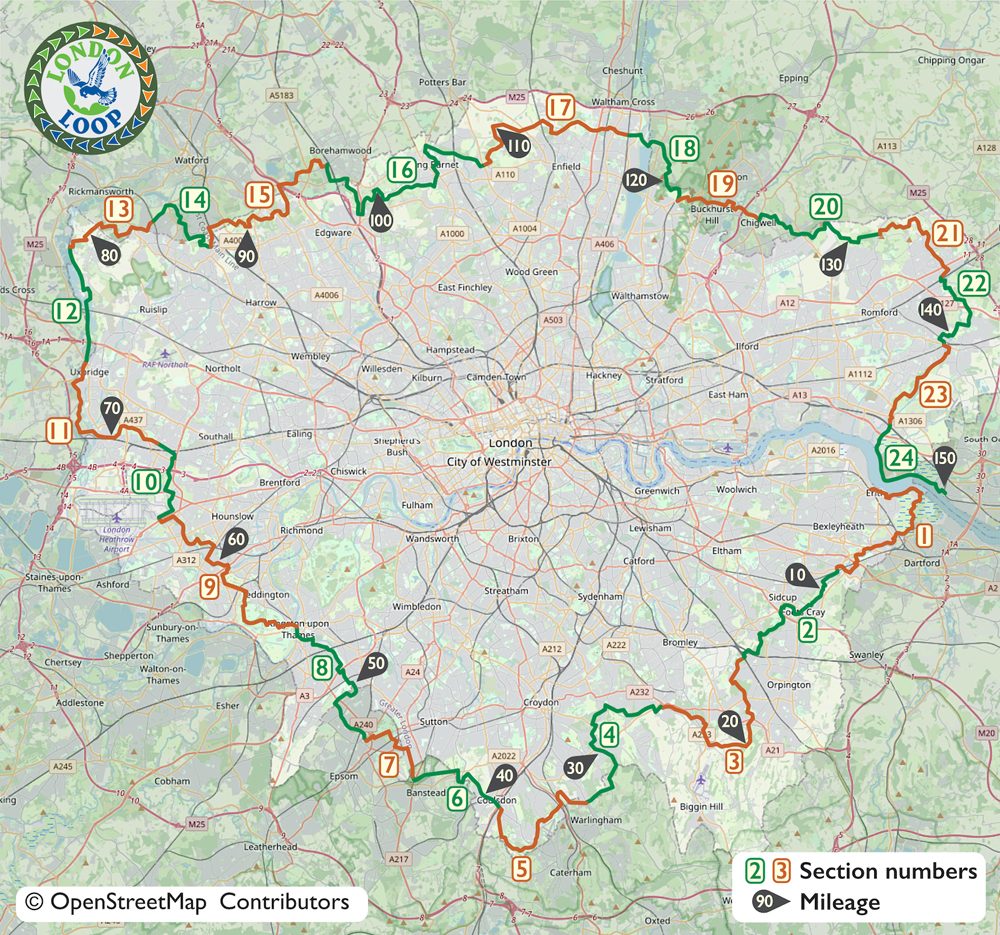
First things first: let’s get some definitions out of the way. “What’s the London LOOP?”, I hear you ask through the screen. Well, as you might have guessed from the capitalisation, ‘LOOP’ is an acronym – it stands for London Outer Orbital Path. (Which means surely it’s technically the London London Outer Orbital Path? But let’s not tussle over tautological tidbits.) Simply put, the LOOP is a 150-mile walking trail that almost fully circumnavigates Greater London, the ceremonial county that is contiguous with what most people refer to as the city of London (but does not include the City of London – capital C – which is its own ceremonial county and operates largely independently of the city of London, with its own police force, mayor, and local authority. Make sense?)
Starting at Erith marshes on the south bank of the far eastern Thames, the LOOP winds its way through countless green spaces around the fringes of the city, crossing the river at Kingston before returning to the far east to finish at Purfleet on the north bank (which means the LOOP is, in fact, not a loop.) Just like London itself, the route emerged in piecemeal, rather than being centrally planned. It was first proposed in 1990 at a meeting between The Ramblers and the Countryside Commission, and the route itself was strung together one chunk at a time over the course of the following decade, before finally being officially opened by Ken Livingstone in 2001. (Four years later, the LOOP’s ‘little sister’, the Capital Ring, which circumnavigates inner London, opened.)
The result of this design-by-committee is a trail that, when you’re following it, feels very different to the smooth, efficient flow of ancient paths like the South Downs Way or the Ridgeway, which emerged more or less organically as a result of continuous footfall. The LOOP feels constructed. It takes you through all the nooks and many of the crannies, constantly diverting you off the obvious line as if to say, “Wait, come and look at this Georgian mansion!” or, “You’ve got to see this really old fence before you go any further.” In the context of an FKT attempt, this means it’s a trail that massively rewards familiarity. Which is just a well, as I’ve been building up to this attempt for a decade.
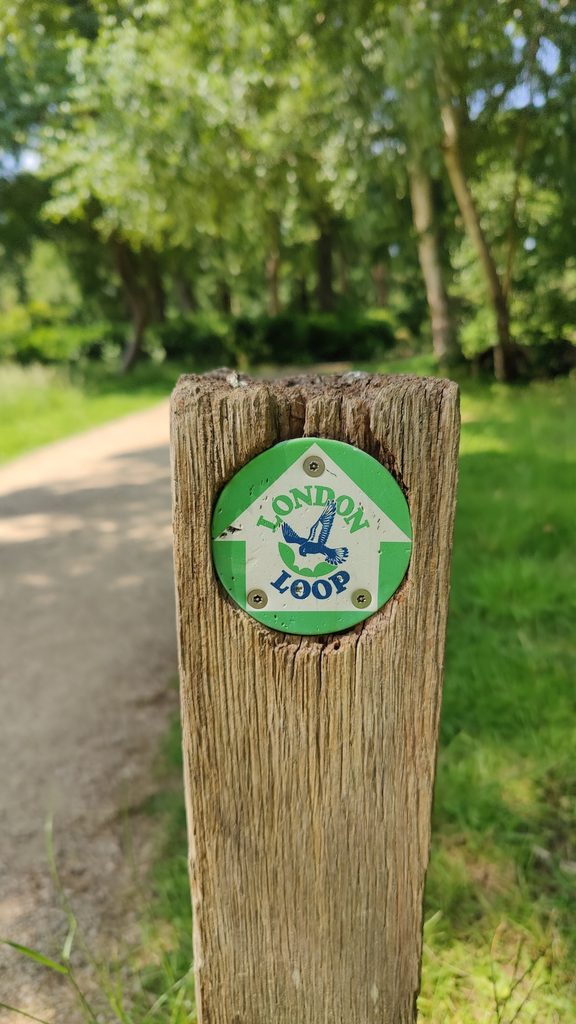
I first started running in 2016, fresh out of university and back living with my parents in Bushey, on the Hertfordshire border with north west London. Beyond weekly swimming lessons and the odd bit of tennis growing up, I’d never done any kind of structured sport. I was more into the clarinet. But for some reason running quickly clicked for me and I soon found myself drawn to the trails. I got hooked on finding and exploring green spaces close to home that I never knew existed, and before long I stumbled upon signs for the London LOOP in Bentley Priory and Harrow Weald Common. A little bit of googling revealed that this slither of trail was part of a much bigger route, and the seed was planted.
Fast forward 10 years and with something like 17 ultras under my belt, including a couple of 100-milers, I finally feel like I’m in a postion to give it a go. 50 miles and potentially 10+ hours further than I’ve ever run, it’s still a stretch goal. But I’ve learned over the years that if you wait until you’re 100% ‘ready’ to take these things on, you’ll be waiting forever.
To parapharse Zach Miller, if you feel like you definitely can’t do it, your goal is too big, but if you feel like you’re definitely going to make it, your goal isn’t big enough. If you feel like you just might make it, that’s the sweet spot to aim for.
Relighting the Spark
Quite quickly after getting into running, I found I had a degree of natural ability. I ran my first 10k in 42 minutes and change, just four or five months in; I ran my first marathon in 3:33 after nine months of running. These aren’t exceptional times, but they’re good for a newbie. I felt like it was reasonable to think I could be competitive at some level in the future.
Over the last few years, that hunch started to prove accurate. In 2024 I managed a fifth place at the Moyleman trail marathon before scoring my first podium at the Chiltern Ridge 50k (Geoff Cheshire won that day.) I followed that up in 2025 with an eight place finish at North Downs Way 50 and a win at one of the 50k races at Race to the Stones.
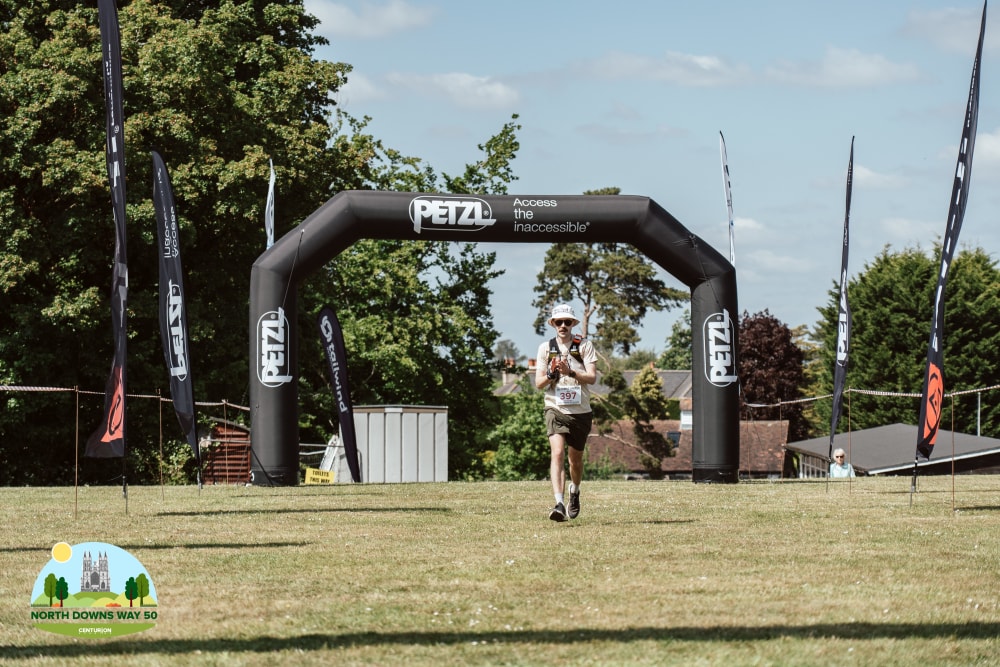
Now, look: I’m under no illusion that the races listed above are truly competitive when viewed in the light of national or international-level events. It’s all relative, but you can only race who shows up on the day. More than any one of these results, the general trajectory of my performance slanting ‘upwards’ was what I found myself fixating on. Somewhere along the way, performance became the end-goal in and of itself, and I lost sight of the adventurous, exploratory side of running which is ultimately what drew me to the sport in the first place.
I hired a coach, and went ‘all-in’ on getting fitter, stronger, and faster. And, remarkably quickly, I burned out.
I spent the last three months of 2025 hardly running at all. I developed a small lump of scar tissue on my right achilles and found I was unable to train consistently. I more or less fell out of love with the sport entirely, such was my resentment at Mother Nature for having kicked me in the teeth. I now know that this was all a necessary part of a bigger process.
Recently, I listened to ultrarunner and photographer Joe Grant on the Singletrack podcast. The host, Finn Melanson, brought up a quote from a 2014 article Joe penned for iRunFar which really resonated with me:
In running-related media, the focus on the activity of running itself prevails over the landscape in which it takes place. To me, running in and of itself is less interesting than the relationship and experience that is formed by practicing the activity in a given place.
Since returning to a consistent training schedule in January 2026, something has slowly clicked for me. The phrase ‘process, not outcome’ is bandied about in ultrarunning so frequently that it’s easy to lose sight of what it’s actually referring to. The last nine months have been all process: building extremely cautiously from just 20km a week at the outset of the year to 100km peak weeks in July and August; returning to ultrarunning along the way, deliberately choosing races that would take me out of my comfort zone and thus disuade me from thinking about performance goals; and now, culminating in a grand adventure that is so far removed from anything I’ve done before that to think about it in terms of a time or performance goal seems absurd.
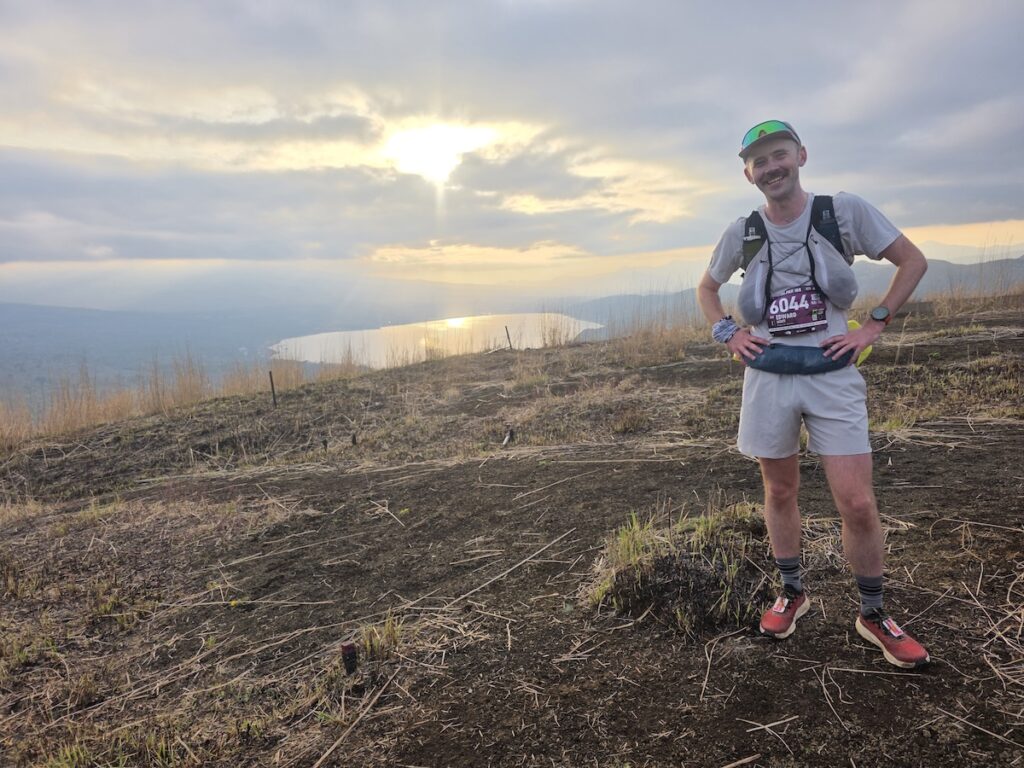
It’s been a slow, quietly joyful experience to feel myself growing stronger each month this year, and for my mind to be brought back into alignment with my body, the two now working in harmony to balance training, recovery, and the demanding schedule of daily life. I’ve realised that, for me, working with a coach is probably never going to be a long-term option.
It’s not that I don’t think a coach could make me a better runner; it’s that handing over control of training to someone else is, for me, the equivalent putting someone else in charge of your meditation practice, or a prayer routine. Running is where I centre myself. On days where I feel hazy, it’s how I re-embody my mind. It’s also where I find community, whether it’s a steady jog with my local brewery run club or a structured workout on the track with my UKA club. To sacrifice all that it gives me in the name of a single variable – performance – now seems absurd. Especially given that the number one predictor of performance long-term is consistency, and in order to run consistently, you have to enjoy it.
All of which is to say that this project, to run the London LOOP, is the culimation of a long process of rediscovering the joy of running. Yes, I hope to break the record, but that goal is secondary to having a rich, rewarding experience on the trail. In fact, let’s invert that funnel – in order to break the record, I believe I have to have a rich, rewarding experience on the trail. Focusing on the present moment is the only way to make this effort a success. If I was fixated on a time goal from the first step, even if I set a new FKT, I’d finish having not been present for 30+ hours of running. 30+ hours of shared experience with pacers, friends old and new. A grand loop of the city I love to mark a decade of running.
That’s why I’m running 150 miles around Greater London on 12th September. To relight the spark and have as rich an experience as possible on a trail that means a lot to me. If you’re about and want to join me for a stretch, please jump in. Bring water and coke for extra points.